: Many Indigenous North American tribes historically recognized "Two-Spirit" individuals who blended masculine and feminine roles, often holding respected spiritual positions. Modern Milestones : The 1969 Stonewall Riots
A recurring tension within LGBTQ culture is the argument by a minority of LGB people (often cisgender and white) that transgender issues are "different" and should have their own movement. This "drop the T" rhetoric, amplified by figures like some radical feminists, ignores the historical symbiosis of the communities. It also fails to recognize that many trans people also identify as gay, lesbian, or bisexual. The demand to exclude trans people from safe spaces (e.g., gay bars or lesbian festivals) replicates the same exclusionary logic historically used against LGB individuals. shemale thick ass top
Many LGBTQ community centers now offer trans-specific support groups, hormone clinics, and legal clinics. However, anecdotal reports of trans people feeling unwelcome in "gay bars" or LGB social groups persist. The solution is not separation but education: creating explicit trans-affirmative policies within all LGBTQ spaces. It also fails to recognize that many trans
" was first used in a 1965 psychology textbook and popularized by activists like Virginia Prince, who argued that sex and gender are distinct. 2. The Transgender Vanguard in LGBTQ Liberation However, anecdotal reports of trans people feeling unwelcome
Transgender individuals have been the primary architects of much of the language and aesthetics used in LGBTQ+ culture today.
To understand this relationship, we have to look at how these communities intersect, the unique challenges trans individuals face, and the cultural shifts they continue to lead. The Historical Anchor: A Shared Fight
The trans community is not monolithic. Experiences differ vastly based on:
Add Sense for Chrome works in both the build-in Sense client and in mashups using the Capabilities APIs
Charts displayed with the API through getObject and visualization.show will be tagged.
Used app(s) will be displayed in the bottom right corner.
Properties and other buttons will work just as in the client.
If your mashup shows charts from more than one app, all will be listed.
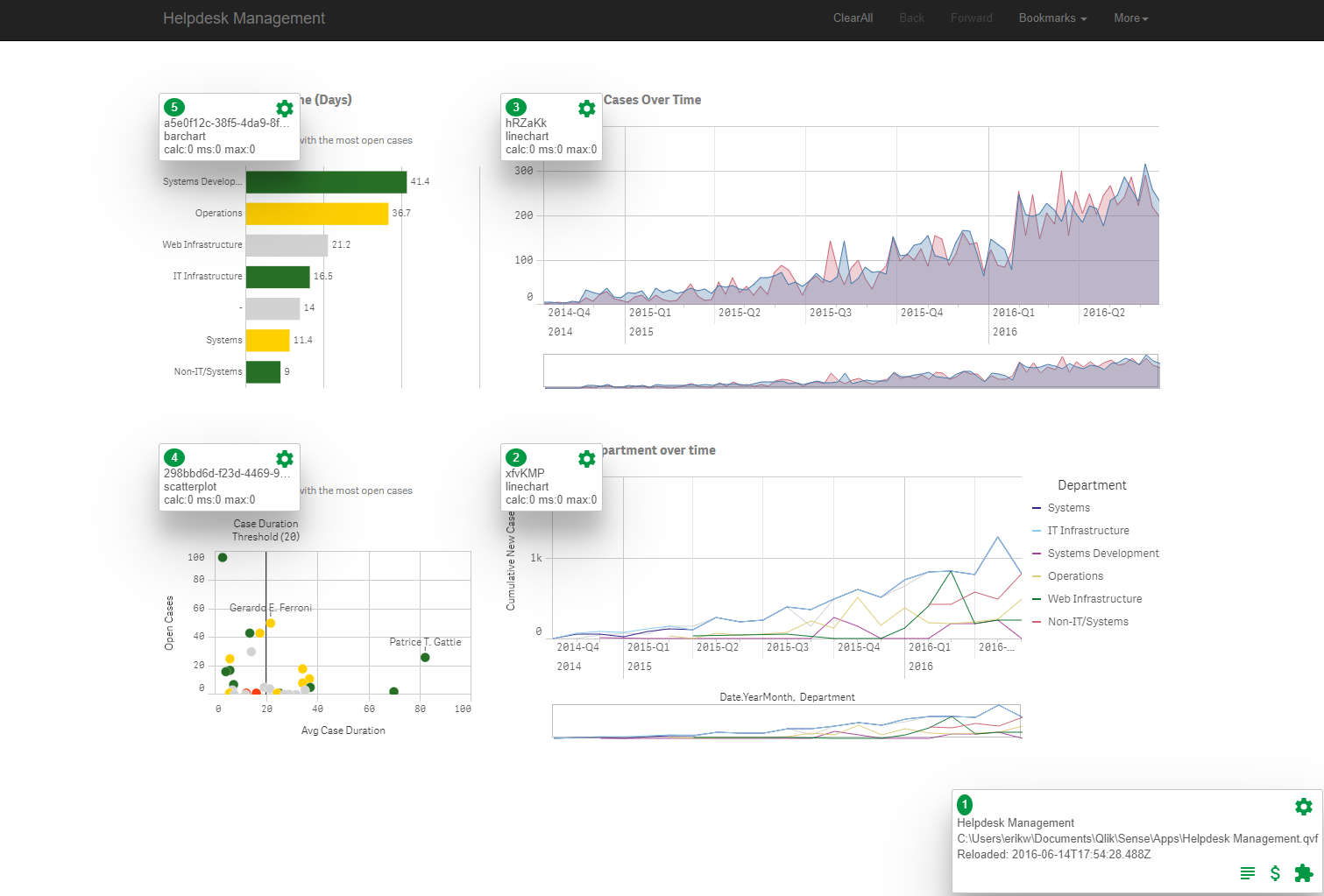
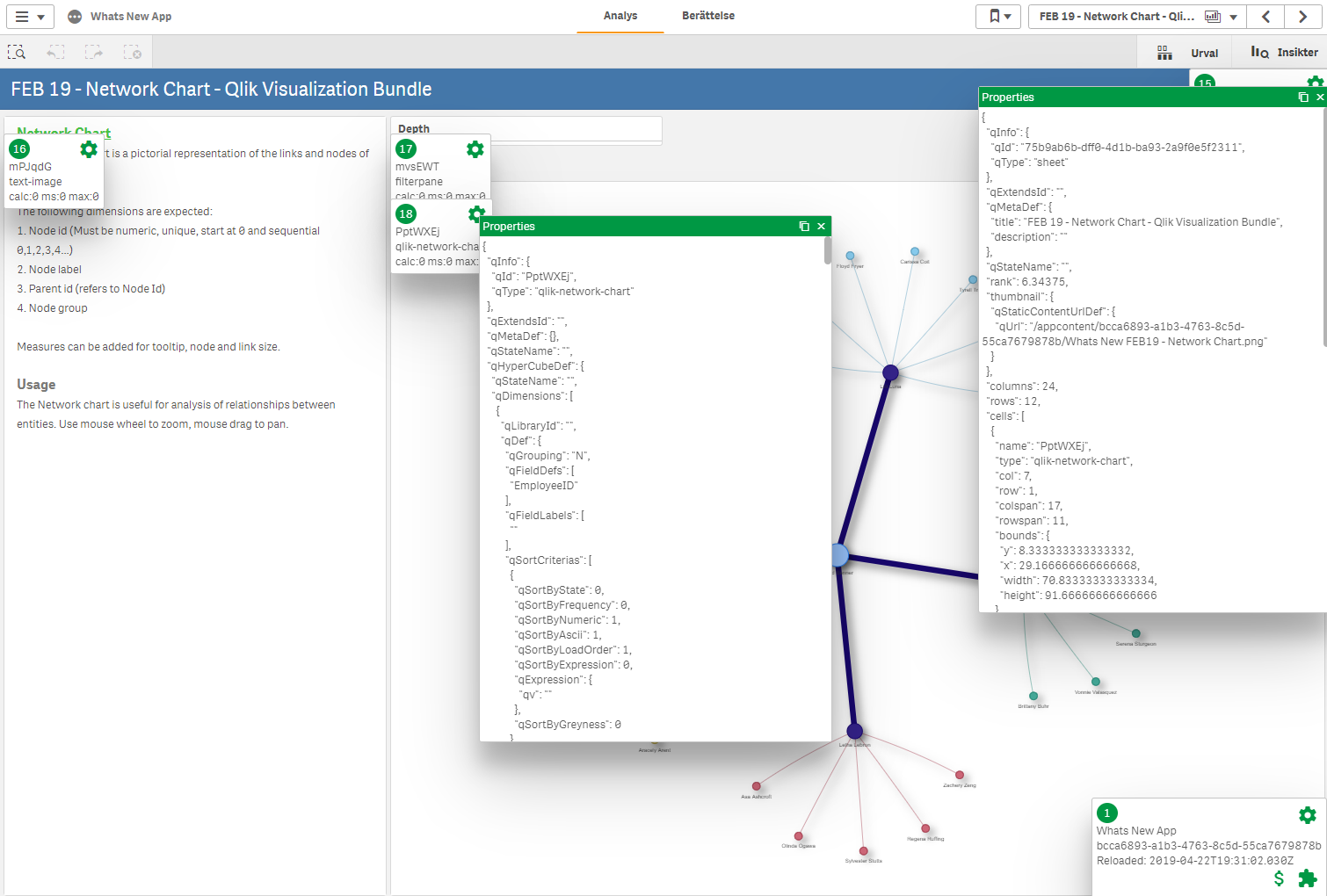
For all charts, sheets and the app you can click on the cogwheel.
That will display the properties for the object.
Use this to troubleshoot or to investigate what settings produce this chart.
You can display several objects properties at the same time, to make comparisons.
Properties can also be copied to clipboard.
From the app box you can inspect the script, variables and app properties.
Windows can be open at the same time and moved.
You can also copy window contents, complete or partly, to the clipboard.
If you do not have access to the script the script button will not be available.
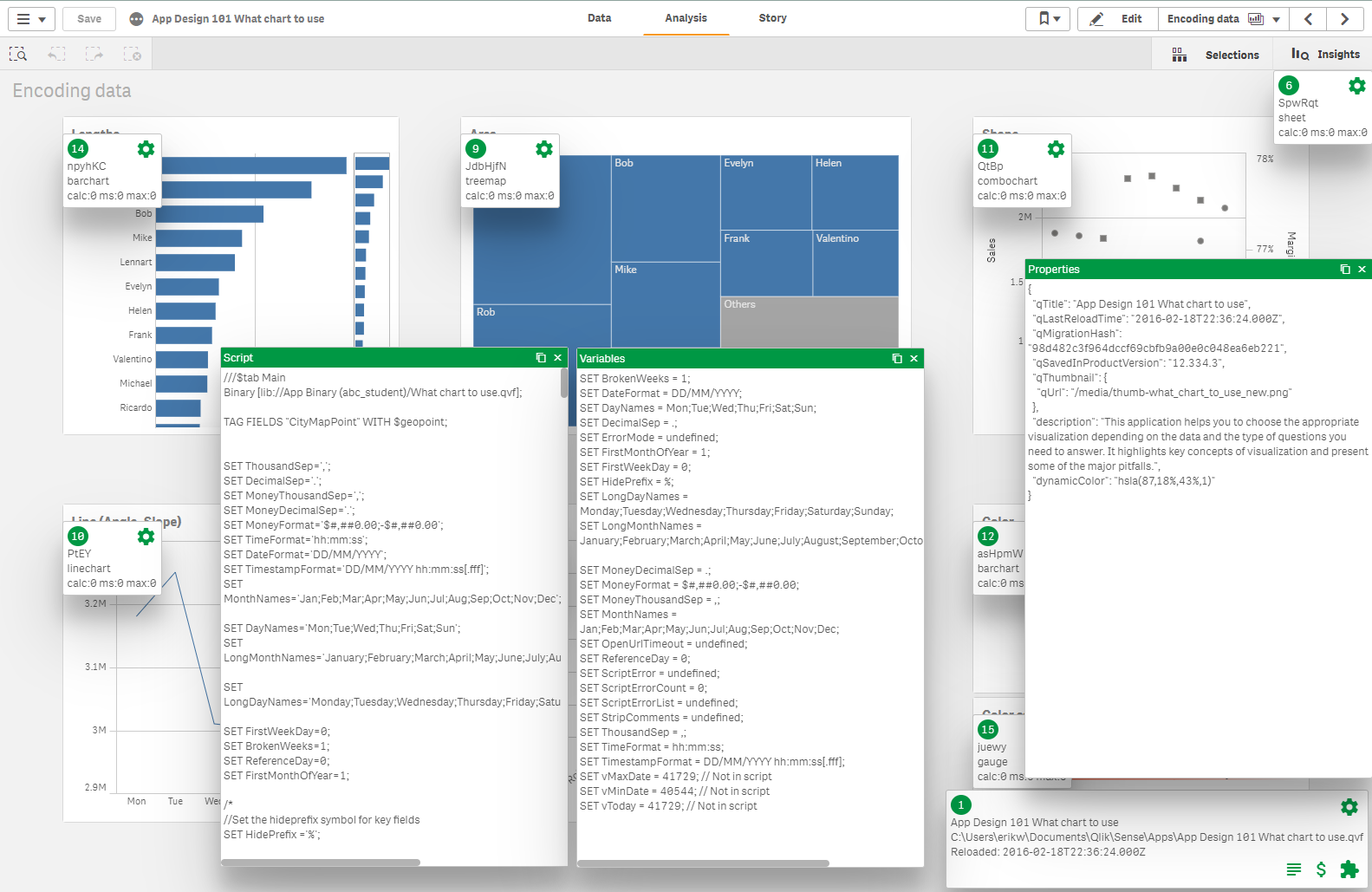
You can also easily see what extensions and charts are used in your app.
Just click on the extensions button in the app info box.
You will get a list of all axtensions and built-in charts are used in your extension, with title and sheet title
Master objects are also included.
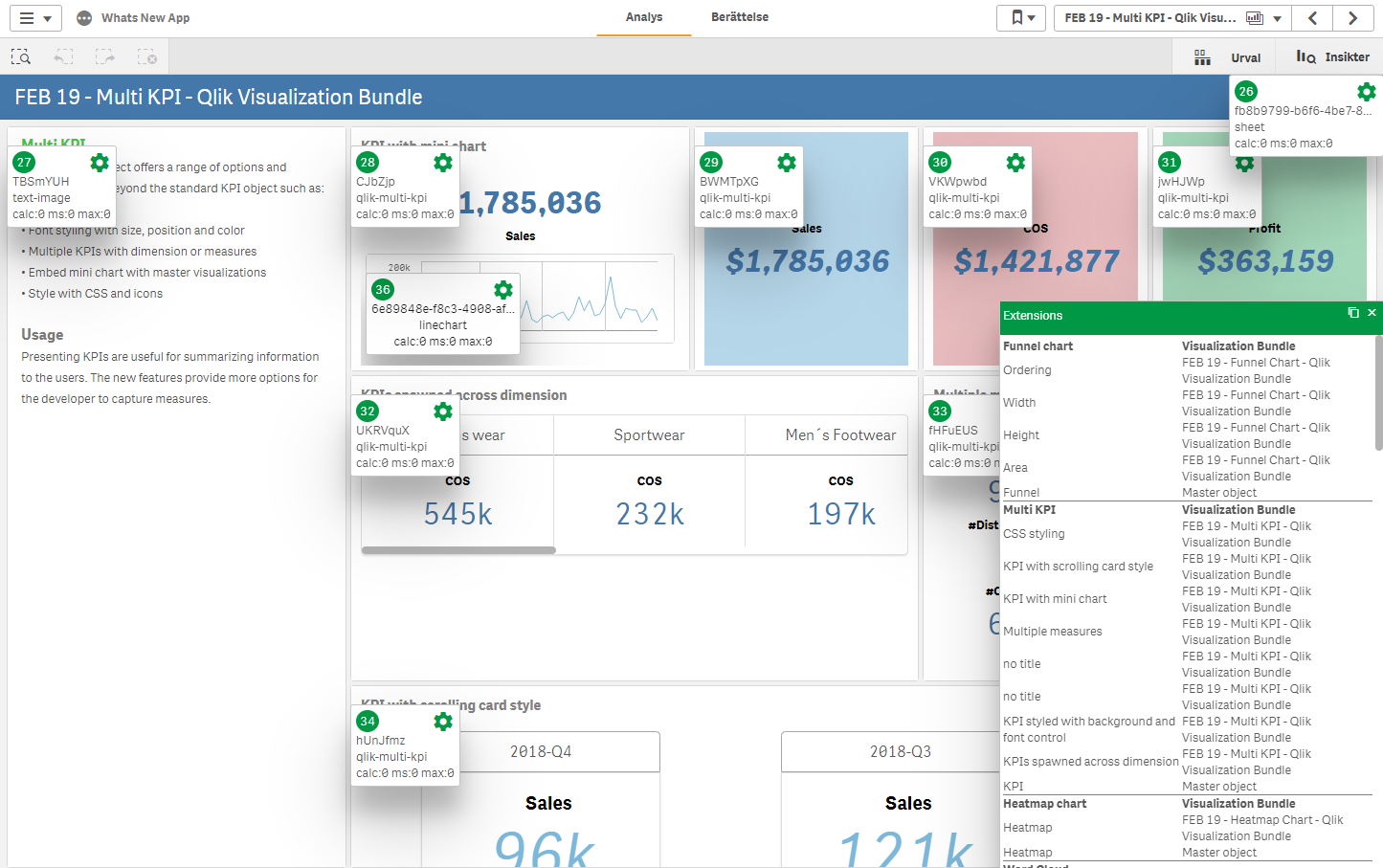
The extension can also help you find performance problems.
When you enable the extension on a page, whether it's the standard client or a mashup, it will start recording recalculation times.
Every time an object is revalidated then extension will register time elapsed for recalculation.
It will also count how many revalidations has occured.
If the object is no longer on the screen, the extension will continue to monitor recalculations, so when you re-enable it you will get all the statistics.